
Key Takeaways
- • IPOs account for 37.3% of all VC exits in South Korea, compared with just 4.7% in the United States, according to a proposal presented by Lim Hyeongjun, a research fellow at the Korea Institute of Finance.
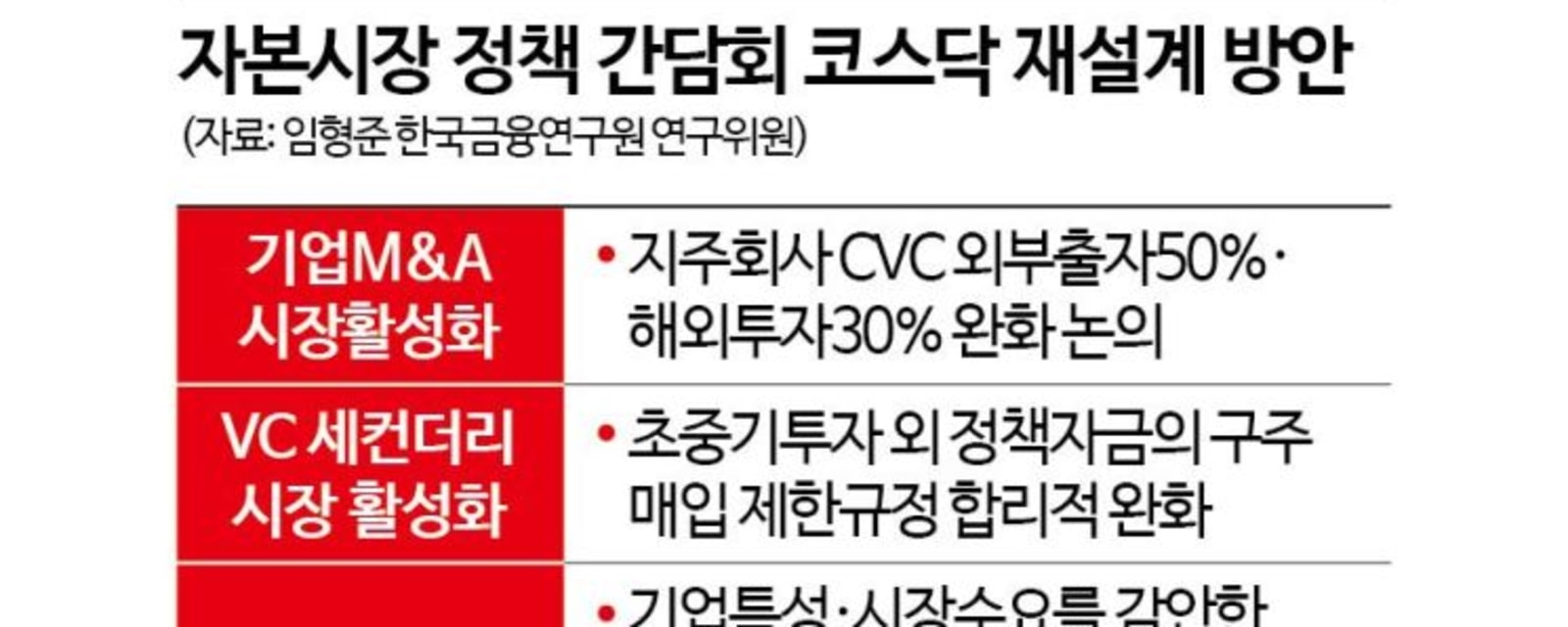
- • The proposal calls for diversifying VC exit routes before the IPO stage by easing limits on holding-company CVC firms' outside investments (currently 50%) and overseas investments (currently 30%).
- • Lim recommended revitalizing the M&A market through policy finance and easing restrictions on policy funds purchasing existing shares to develop the secondary market and reduce pressure for early listings.
- • Proposed IPO-stage reforms include industry-specific screening criteria, a cornerstone investor system, and having the Korea Fund of Funds and Korea Development Bank weigh post-listing distress when selecting VCs.
Summary
A research proposal presented at the Capital Market Policy Meeting in Yeouido, Seoul, on November 13, 2026, argues that South Korea's KOSDAQ market needs to activate its M&A and secondary markets to become a dynamic "high-entry, high-exit" ecosystem. The meeting was chaired by President Lee Jae-myung. Lim Hyeongjun, a research fellow at the Korea Institute of Finance, presented the proposals under the heading "Rebuilding the Venture Ecosystem and KOSDAQ," according to The Asia Business Daily.
The central diagnosis is that VC capital exits are excessively concentrated in IPOs, which creates strong pressure for early listings. IPOs represent 37.3% of VC exits in Korea versus 4.7% in the United States. The report also notes that a growing number of companies see weak share price performance after listing, and that delayed delistings leave distressed companies alongside sound ones. This is described as a vicious cycle in which valuations and liquidity decline together, discouraging institutional investors.
To diversify exit routes, Lim proposed rationalizing regulations, including discussing easing the 50% limit on outside investments and the 30% limit on overseas investments by holding-company CVC firms, and revitalizing the M&A market through policy finance. He also called for easing restrictions on policy funds purchasing existing shares to build the secondary market.
At the IPO stage, Lim proposed industry-tailored screening criteria for innovative companies, and a cornerstone investor system to strengthen the responsibilities of underwriters and institutional investors. He further suggested that the Korea Fund of Funds and the Korea Development Bank consider whether VC portfolio companies become distressed after listing when selecting VCs.
On the KOSDAQ tiering system, Lim said it brings both expectations and concerns. The key, he argued, is distinguishing sound, high-growth companies from distressed ones so that viable companies remain on KOSDAQ and attract institutional investment, while avoiding stigmatizing newly listed companies during implementation.
The central diagnosis is that VC capital exits are excessively concentrated in IPOs, which creates strong pressure for early listings. IPOs represent 37.3% of VC exits in Korea versus 4.7% in the United States. The report also notes that a growing number of companies see weak share price performance after listing, and that delayed delistings leave distressed companies alongside sound ones. This is described as a vicious cycle in which valuations and liquidity decline together, discouraging institutional investors.
To diversify exit routes, Lim proposed rationalizing regulations, including discussing easing the 50% limit on outside investments and the 30% limit on overseas investments by holding-company CVC firms, and revitalizing the M&A market through policy finance. He also called for easing restrictions on policy funds purchasing existing shares to build the secondary market.
At the IPO stage, Lim proposed industry-tailored screening criteria for innovative companies, and a cornerstone investor system to strengthen the responsibilities of underwriters and institutional investors. He further suggested that the Korea Fund of Funds and the Korea Development Bank consider whether VC portfolio companies become distressed after listing when selecting VCs.
On the KOSDAQ tiering system, Lim said it brings both expectations and concerns. The key, he argued, is distinguishing sound, high-growth companies from distressed ones so that viable companies remain on KOSDAQ and attract institutional investment, while avoiding stigmatizing newly listed companies during implementation.
Go deeper than the headline
Research every firm in this story, track the ones that matter and get the daily briefing — free for 7 days.