
Key Takeaways
- • The Urban Land Institute and Heitman report "Investment Strategies in the AI Era: Power Is the New Location" argues that real estate investors can gain AI exposure beyond direct data center ownership, citing six opportunities.
- • A single hyperscale data center can require as much capital as an entire traditional real estate fund, and just seven technology companies account for U.S. hyperscale data center tenancy, according to the report.
- • Industrial sites in Loudoun County, Virginia are trading for more than $4 million an acre, with sites able to secure power within 18 to 36 months attracting the most interest, per the Urban Land Institute.
- • Xcel Energy's Capacity*Connect program in Minnesota plans up to 200 megawatts of commercial and industrial site batteries by 2028, backed by roughly $430 million in payments to property owners.
- • Data-center-related tenants accounted for 14.4% of industrial leasing across six major U.S. markets in 2025, up 44% from a year earlier, according to Cushman & Wakefield.
Summary
A new report from the Urban Land Institute (ULI) and global real estate investment manager Heitman, titled "Investment Strategies in the AI Era: Power Is the New Location," maps six real estate strategies that offer exposure to the AI infrastructure build-out without requiring direct ownership of data centers. The report cites capital intensity and tenant concentration as barriers: a single hyperscale facility can require as much capital as an entire traditional real estate fund, and only seven technology companies account for U.S. hyperscale data center tenancy.
The first opportunity is powered land. Per ULI, industrial sites in Loudoun County, Virginia are trading for more than $4 million an acre, and parcels that can secure electricity within 18 to 36 months draw the most interest. Some investors, however, argue the opportunity has narrowed; one U.S. investor interviewed for the report said returns have been diluted by the risk profile. Hines estimates roughly 40,000 acres, or nearly 2 billion square feet, will be needed globally over the next five years.
Battery storage offers a second route. Owners of industrial sites, self-storage facilities, parking lots and land near substations lease space to battery developers, who fund and operate the systems while the owner collects rent. Xcel Energy's Capacity*Connect program in Minnesota targets up to 200 megawatts of batteries across commercial and industrial sites by 2028, with roughly $430 million in payments to participating property owners.
Warehouses with substantial power are a third play, as automated manufacturing raises electricity requirements. The report notes some industrial operations need 1 to 5 megawatts, and some plants use four times that. Data from J.P. Morgan show warehouses and distribution centers with more than 4,000 amps are selling for more per square foot than industrial properties overall.
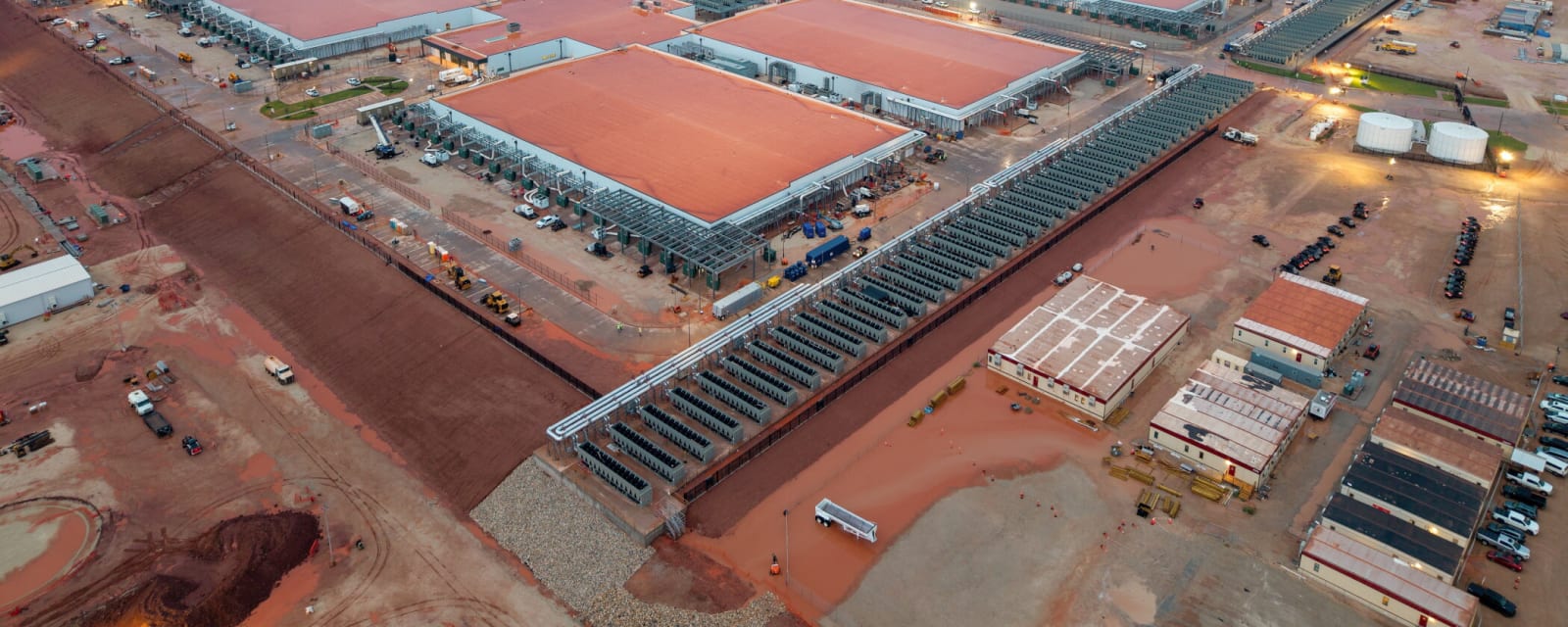
The fourth strategy involves housing and storage for construction workers and equipment. In Abilene, Texas, home to the first Stargate project, DataCenterPads and Nika Corporate Housing are developing short-term modular and permanent housing. Cushman & Wakefield research cited in the article shows data-center-related tenants took 14.4% of industrial leasing across six major U.S. data center markets in 2025, up 44% from a year earlier.
Converting existing buildings with power and fiber connections is the fifth option, though the article cautions that retrofits often require heavy spending on cooling and electrical upgrades and do not always pencil out, except where speed-to-market or planning constraints favor reuse. The sixth strategy is localized AI computing: owners with spare electrical capacity could lease small spaces for inference workloads ranging from about 50 kilowatts to several megawatts, compared with hyperscale campuses that typically start around 100 megawatts and can exceed 1 gigawatt. The report also acknowledges uncertainty, with one interviewee noting that businesses need to stress test a range of scenarios.
Go deeper than the headline
Research every firm in this story, track the ones that matter and get the daily briefing — free for 7 days.