
Key Takeaways
- • Cascade Private Capital Fund (CPEFX) is a $5.4 billion interval fund with 95.7% of its portfolio in private, unpriced securities, creating severe valuation opacity and redemption risk for retail wealth-channel investors.
- • The fund's two largest positions are Pathway Select fund-of-funds holdings (15.8% of net assets combined), and its sixth-largest position is sister lending fund CCLFX valued at $99.2 million, creating nested leverage and interconnected valuation dependency.
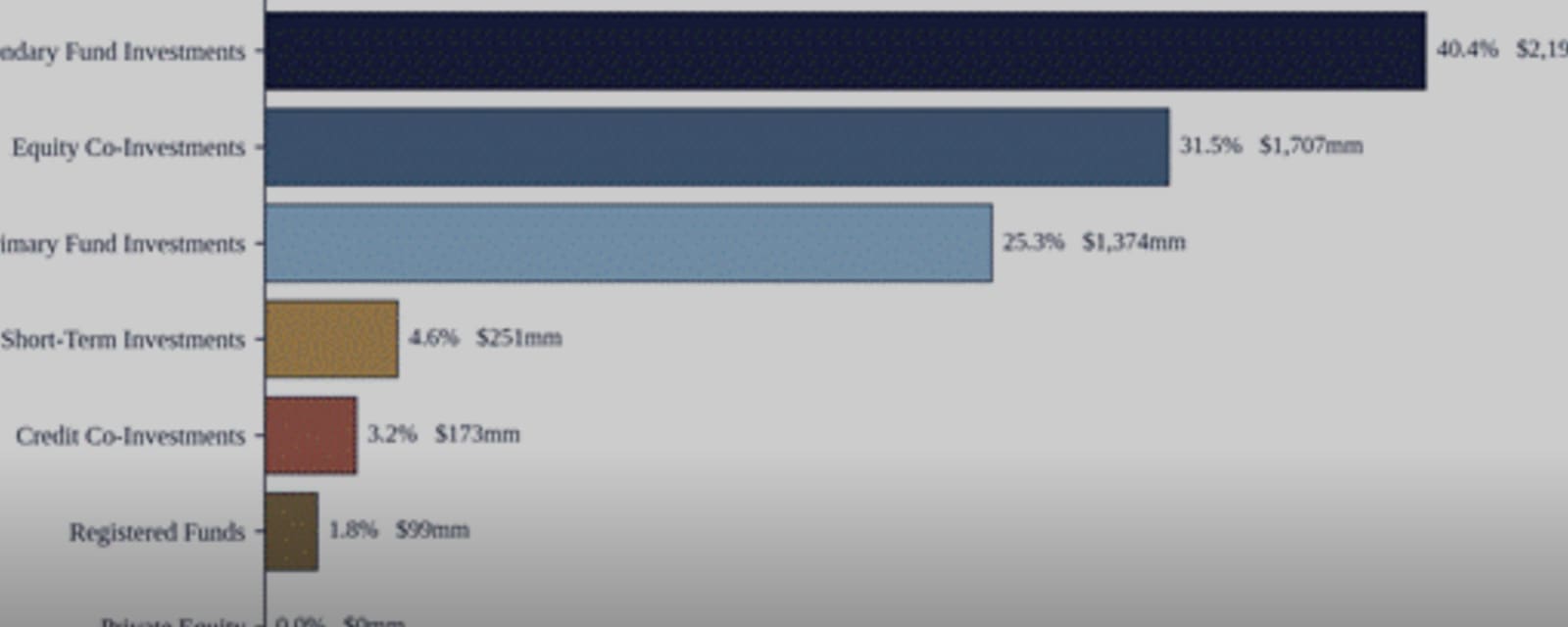
- • Structural liquidity mismatch: CPEFX offers redemptions twice annually while underlying borrowers are financed for years; the fund holds only $251 million in liquid money-market instruments against a $5.4 billion asset base, creating acute redemption stress scenarios.
- • Portfolio composition includes a private-credit sleeve with loans yielding 13% in-kind (non-cash) payment structures and approximately 40% of assets held indirectly through CLOs, BDCs, and fund stakes rather than direct loans, amplifying valuation risk through multiple layers of mark estimation.
- • 85% of the portfolio relies on NAV practical expedient valuation methodology with returns driven primarily by unrealized gains, raising concerns about mark staleness and the reliability of reported performance metrics.
Summary
Cliffwater's Cascade Private Capital Fund (CPEFX) presents a material case study in private credit opacity and structural redemption risk. The $5.4 billion interval fund, distributed through the wealth channel to retail investors, carries 95.7% of its portfolio in securities with no market pricing, relying entirely on fund manager valuations and NAV practical expedient methodologies. This concentration in illiquid, internally-marked assets creates a fundamental disconnect between investor liquidity expectations and portfolio reality.
The fund's portfolio construction reveals compounding layers of opacity. Its two largest holdings—both series of Pathway Select, a third-party fund-of-funds vehicle—collectively represent 15.8% of net assets. The sixth-largest position is CCLFX, Cliffwater's sister corporate lending fund, carried at $99.2 million. This nested fund-of-funds structure, combined with significant indirect holdings through CLOs and BDCs, means valuations rest on cascading mark determinations across multiple entities rather than observable market prices. Additionally, the portfolio contains a private-credit sleeve with loans structured to pay 13% yields entirely in-kind (non-cash accretions), removing even coupon-based price discovery mechanisms.
A critical structural vulnerability emerges from the redemption-liquidity profile. CPEFX offers investors redemption windows twice annually, creating an expectation of semi-annual exit optionality. However, the underlying loan portfolio is financed on multi-year terms. The fund's sole liquid holding—a $251 million money-market position—represents less than 5% of assets and is smaller than a single semiannual redemption cycle, according to the analysis. This gap between investor redemption frequency and borrower financing duration creates acute vulnerability to redemption waves; if significant outflows occur, the fund would be forced to liquidate illiquid positions or impose gates, directly constraining borrower financing and potentially triggering cascading mark adjustments.
The fund's reliance on unrealized gains—compounded by the 85% NAV practical expedient valuation methodology—raises material questions about return sustainability and mark staleness. In an environment where private credit broadly faces increased redemption pressure and valuation scrutiny, CPEFX's structure concentrates both mark-estimation risk and liquidity risk on a single institution's valuation framework, with limited external price discovery mechanisms to validate reported net asset values.
Go deeper than the headline
Research every firm in this story, track the ones that matter and get the daily briefing — free for 7 days.