
Key Takeaways
- • Industry leaders at ET FoodXP 2026 argued that private equity and venture funding should accelerate growth in India's restaurant sector, not substitute for profitability, operational discipline and internally generated cash flow.
- • Amit Bagga, Co-Founder of Daryaganj Restaurants, said the best time to raise funds is when the investor needs the business more than the business needs the investor, and that profit should grow faster than revenue.
- • Kabir Suri, Co-Founder & Director of Azure Hospitality, said Azure raised seed capital of approximately $2 million before opening its first restaurant, and warned that private equity creates a 'continuous expansion treadmill' tied to fund exit timelines.
- • Abhik Mitra, Operating Partner at Samara Capital and MD/CEO of Paradise FoodCourt, cited Paradise's shift from large-format casual dining toward a QSR-focused model after Samara assumed full control in early 2022, and questioned whether high real-estate formats can match QSR expansion economics.
- • Speakers stressed same-store sales growth and store-level economics as the primary measures of performance, cautioning that outlet additions alone can weaken long-term enterprise value.
Summary
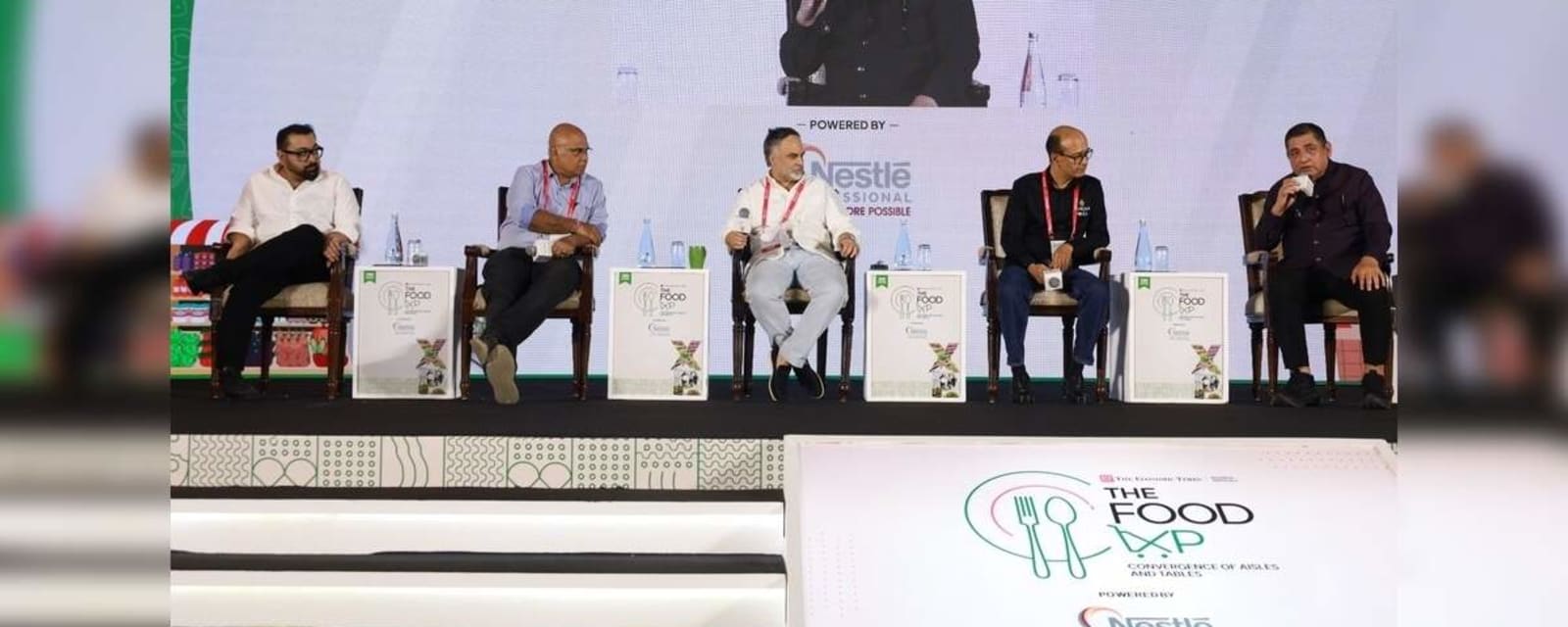
At the second edition of ET FoodXP 2026, leaders from Daryaganj Restaurants, Samara Capital, Paradise FoodCourt, Azure Hospitality and Lite Bite Foods examined the opportunities and pressures associated with private equity and venture funding in India's restaurant industry, according to ET HospitalityWorld. The panel, PE and Venture Funding in the Restaurant Industry, was moderated by Anjan Chatterjee, Chairman & MD of Speciality Restaurants. The consensus was that external capital can accelerate expansion, but only once a business can generate internal cash flows and demonstrate a viable operating model.
Amit Bagga, Co-Founder of Daryaganj Restaurants, argued that fundraising should come from a position of financial strength. He said a profitable business should ideally fund part of its expansion through internal accruals, with external investment serving as an accelerator. He gave an example in which an expansion plan that might take five years could be completed in two or three years with additional capital. He cautioned, however, against business models that depend on successive funding rounds, and said Daryaganj's focus on profitable outlets from early stages had given it flexibility over when and whether to raise capital.
Kabir Suri, Co-Founder & Director of Azure Hospitality, offered a contrasting view. He said the decision to take private equity depends on a company's ambitions, format and desired pace of expansion, and that multi-city growth requires significantly more capital. Azure raised seed capital of approximately $2 million before opening its first restaurant. Suri cautioned that private equity funds operate within defined holding periods and must generate returns and exits, which he described as a continuous expansion treadmill that can push companies toward additional outlets and further funding rounds. He noted that exits may come through strategic acquisitions, secondary transactions or public listings, and warned against treating all restaurant segments as comparable, since quick-service, casual dining and fine-dining businesses have different capital needs and economics.
Abhik Mitra, Operating Partner at Samara Capital and MD/CEO of Paradise FoodCourt Ltd, said private equity investors generally prefer established companies with validated models, though India's organised restaurant sector is still evolving. He cited Paradise as an example of a transformation case: after Samara's investment and assumption of full control in early 2022, the business began moving from a large-format, casual dining structure toward a QSR-focused approach, which he said requires investment, restructuring and patience. He pointed to biryani, chai and momos as categories attracting investor interest, and questioned whether high real-estate-cost formats can match the expansion economics of standardised QSR, noting that rents and delivery-platform margins complicate the equation.
Ranjit Paliath, CEO of Lite Bite Foods Pvt Ltd, said family-backed businesses face comparable financial discipline. Lite Bite manages multiple brands and approximately 150 outlets under a five-year plan with defined returns and milestones. He said family capital allows more flexibility for long-term brand building, but that this flexibility does not remove accountability for efficient capital deployment.
Across the panel, same-store sales growth was identified as a central measure of success. Mitra said investment decisions must rest on strong store-level economics and that rapid expansion can lift total revenue without improving earnings quality. Bagga said same-store growth is among the most important indicators he tracks at Daryaganj, which has sustained it over several years through a mix of demand growth and considered price adjustments.
Go deeper than the headline
Research every firm in this story, track the ones that matter and get the daily briefing — free for 7 days.