
Key Takeaways
- • Don Steinbrugge of Agecroft Partners forecasts strong inflows into hedge funds in 2026 as demand for private equity moderates, positioning the asset class for robust capital deployment and manager fundraising.
- • Long/short equity strategies are expected to outperform in 2026, driven by widening valuation gaps between stocks, creating tactical opportunities for managers employing this approach.
- • Agecroft recommends a contrarian investment posture in 2026, advocating for portfolio reallocation toward undervalued and overlooked market segments rather than crowded consensus positions.
- • Top-tier hedge fund managers and specialized strategies are anticipated to capture disproportionate inflows in 2026, while mid-tier and undifferentiated managers face a more challenging fundraising environment.
- • Institutional allocators are increasing hedge fund exposure significantly; Goldman Sachs' 2026 survey indicates 49% of allocators plan to raise hedge fund positioning versus 37% in the prior year, with only 4% reducing exposure.
Summary
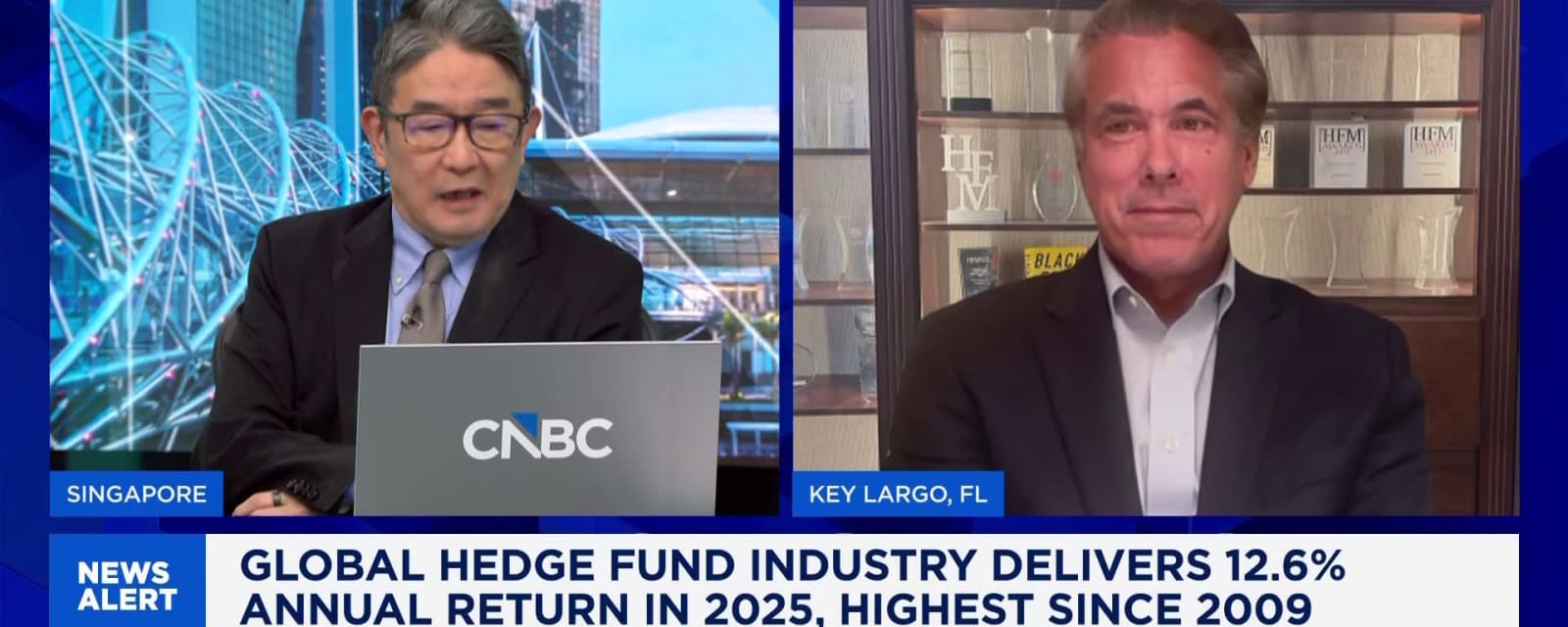
Don Steinbrugge, senior analyst at Agecroft Partners, outlined a constructive outlook for hedge funds in 2026 during an appearance on CNBC's Squawk Box Asia on January 14, 2026. Steinbrugge expects substantial capital inflows into the hedge fund industry as institutional allocators rotate away from private equity, which has faced headwinds in recent periods. This shift in capital allocation dynamics positions hedge funds as beneficiaries of broader institutional rebalancing efforts.
Steinbrugge identifies long/short equity strategies as the primary beneficiary of 2026 market conditions. He attributes this outlook to widening valuation dispersion across equities, which creates an expanded opportunity set for skilled managers employing market-neutral and directional long/short approaches. This dispersion suggests asymmetric risk-reward dynamics favoring active management capable of exploiting pricing inefficiencies.
The Agecroft perspective emphasizes a contrarian positioning strategy for 2026. Rather than following consensus allocations into crowded trades, Steinbrugge advocates for reallocating portfolios toward market segments that have been overlooked or undervalued by the broader investment community. This approach assumes that mean reversion and value factor performance will characterize the year ahead.
The fundraising landscape for hedge funds is expected to bifurcate in 2026. Agecroft notes that top-performing managers and differentiated strategies will attract strong capital flows, while less specialized or lower-performing managers will face significantly more difficult fundraising conditions. This dynamic reflects institutional allocators' increasing selectivity in manager selection and strategy focus.
Institutional demand metrics support Agecroft's bullish stance. According to Goldman Sachs' 2026 survey data, 49% of institutional allocators plan to increase hedge fund allocations during the year, compared to 37% in the prior year. Conversely, only 4% of allocators expect to reduce hedge fund exposure, indicating a pronounced shift toward the asset class despite volatile market conditions and economic uncertainty.
Go deeper than the headline
Research every firm in this story, track the ones that matter and get the daily briefing — free for 7 days.