
Key Takeaways
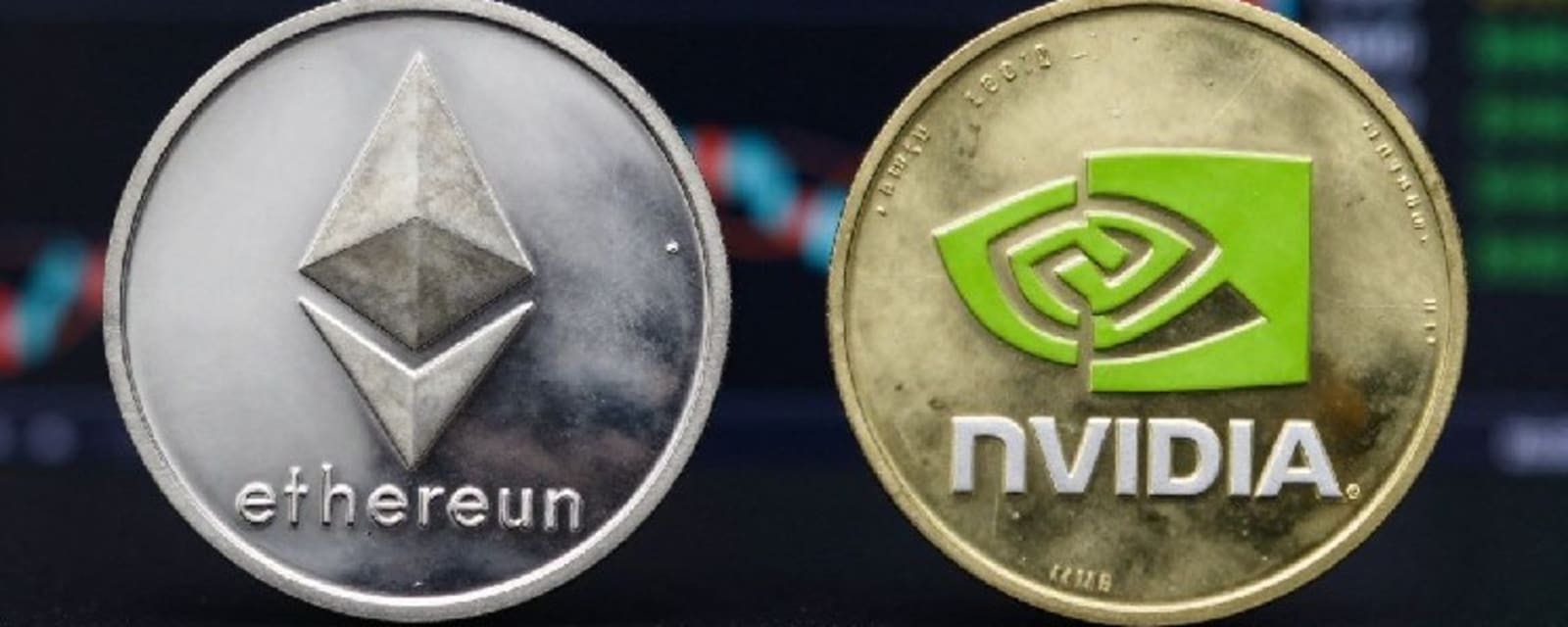
- • Stark five-year divergence in returns: A $100,000 investment in Ethereum five years ago declined to $85,000 (15% loss), while the identical NVIDIA investment surged to $1.4 million—a 1,300% gain—underscoring fundamental performance differences between cryptocurrency and AI-driven semiconductor sectors.
- • Ethereum down 47% from 2026 January highs: ETH has fallen from $3,500 at the start of the year to approximately $2,320, driven by recession concerns, regulatory uncertainty, and selling by co-founder Vitalik Buterin that has weakened investor confidence.
- • Ethereum's generational returns were front-loaded: Extending the analysis window to eleven years (2015 baseline) reverses the narrative—a $100,000 ETH position from 2015 would be worth approximately $460 million versus $60 million for NVIDIA—highlighting that Ethereum's most significant gains occurred during its earliest, pre-institutional phase.
- • NVIDIA's advantage rooted in execution and institutional demand: NVIDIA's growth reflects monopolistic control of AI hardware infrastructure and massive institutional contracts, whereas Ethereum faces ongoing challenges from volatility, regulatory uncertainty, and competition despite technological improvements including proof-of-stake migration and scalability upgrades.
- • Ethereum's institutional adoption remains constrained: While Ethereum maintained its position as the leading smart contract platform, institutional adoption has been limited by price volatility, regulatory headwinds, and the mismatch between technological potential and price performance over the past five years.
Summary
The comparative performance of Ethereum and NVIDIA over the past five years has emerged as a sobering reality check for cryptocurrency investors and a focal point of ongoing debate within the digital asset community. A $100,000 investment in Ethereum made five years ago has depreciated to $85,000 today, representing a 15% nominal loss over the period. By contrast, an identical investment in NVIDIA during the same timeframe has appreciated to approximately $1.4 million, reflecting a 1,300% gain driven by the company's dominance in artificial intelligence hardware infrastructure.
The divergence has proven particularly jarring given widespread expectations that Ethereum would lead the future of decentralized finance. The asset powered DeFi protocols, NFTs, and smart contract ecosystems while attracting developer talent and institutional interest. Ethereum has evolved technically, completing its transition to proof-of-stake consensus and implementing scalability improvements. Yet execution in price performance has not matched technological progression. The cryptocurrency has fallen approximately 47% from January 2026 highs of $3,500 to current levels near $2,320, weighed down by recession concerns, regulatory uncertainty, and recent selling by co-founder Vitalik Buterin that has undermined near-term investor sentiment.
NVIDIA's outperformance reflects contrasting market dynamics. The chipmaker capitalized on institutional demand for AI infrastructure and established near-monopolistic control over GPU supply chains essential to artificial intelligence deployment. This translated into sustained institutional contracts, earnings growth, and valuation expansion—a trajectory grounded in fundamental business execution rather than speculative sentiment.
Ethereum advocates have countered with historical perspective, noting that extending the analysis window to 2015 (eleven years) fundamentally alters the comparison. A $100,000 Ethereum position from 2015 would be worth approximately $460 million today, compared to $60 million for NVIDIA over the identical period. This counter-argument underscores a critical insight: Ethereum's generational returns were front-loaded during its earliest years, before institutional accessibility and widespread adoption. The broader debate reflects the tension between measuring performance from speculative peaks (April 2021) versus measuring from foundational periods, as well as the fundamental difference between technological potential and realized price performance in allocating capital across sectors.
Go deeper than the headline
Research every firm in this story, track the ones that matter and get the daily briefing — free for 7 days.