
Key Takeaways
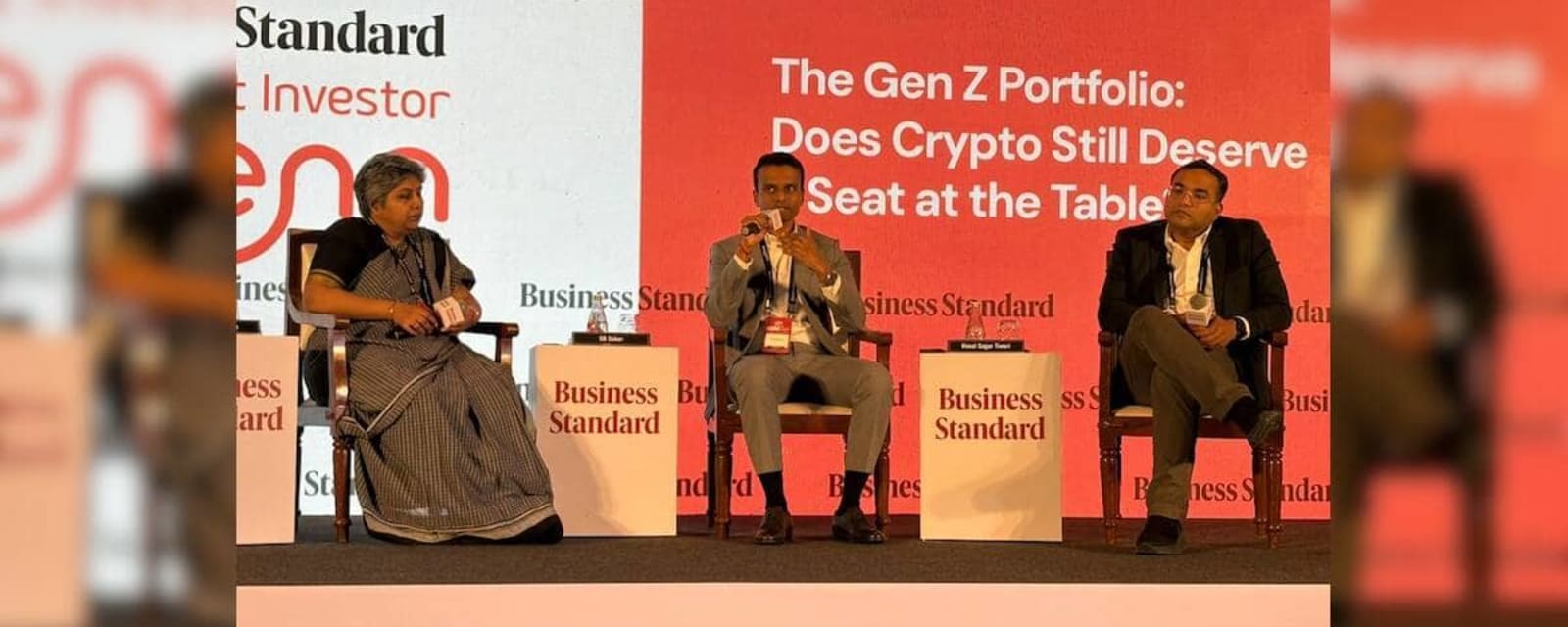
- • Experts at the Business Standard Smart Investor Arena 2026 urged young investors to prioritise education and independent research before buying cryptocurrencies, warning against online tips and chasing tokens for quick gains.
- • SB Seker, head of Asia-Pacific at Binance, and Vimal Sagar Tiwari, co-founder of CoinSwitch, advised beginners to invest only an amount they can afford to lose, with Tiwari suggesting starting with ₹100 or ₹500.
- • Unlike equities, cryptocurrencies are harder to value; speakers pointed to use cases, network activity, scarcity and investor demand as the basis for an investment case.
- • Seker identified tokenisation and stablecoins as key digital finance developments, while both speakers flagged quantum computing as a potential future challenge to blockchain cryptography.
Summary
Young investors should understand how cryptocurrencies work, what gives them value, and how much they can afford to lose before investing, according to experts speaking at the Business Standard Smart Investor Arena 2026. Speaking at a session titled "The Gen Z Portfolio: Does Crypto Still Deserve a Seat at the Table?", SB Seker, head of Asia-Pacific at Binance, and Vimal Sagar Tiwari, co-founder of CoinSwitch, urged young people to prioritise education and independent research over speculation. They cautioned that following online tips or chasing tokens on the promise of quick gains can expose inexperienced investors to risks they may not fully understand.
Tiwari said cryptocurrencies remain a relatively young asset class capable of sharp price movements, and that investors should not commit money they may need in the near term. He suggested beginners try a very small amount, potentially ₹100 or ₹500, to understand how the asset works. Seker advised against basing decisions solely on the opinions of friends or family, recommending that investors study the underlying technology, including blockchain networks, wallets and transaction verification, to assess the risks of individual projects.
Valuation was a central theme. Unlike shares, which can be assessed using earnings, balance sheets and cash flows, cryptocurrencies are harder to value, with investment cases depending on use cases, network activity, scarcity and investor demand. Tiwari compared Bitcoin to digital gold, citing its limited supply and its ability to record transactions without a central intermediary, and likened Ethereum to an operating system whose value is partly linked to applications built on it. Seker said investors should form their own thesis by studying a token's white paper, use case and market potential, and reconsider if they cannot establish why an asset has economic value.
Seker identified tokenisation and stablecoins as important developments in digital finance. He said tokenised assets could offer access to certain instruments through digital platforms, including fractional purchases and trading outside traditional market hours, but that these benefits do not remove the need to understand underlying rights and risks. On quantum computing, both speakers acknowledged it could pose a future challenge to blockchain cryptography; Tiwari said developers were working on potential upgrades but investors should not assume every risk will be resolved automatically.
Both speakers emphasised that crypto allocation should match an investor's financial circumstances, goals and risk appetite. Seker said investors should also assess whether a token's use case is viable and whether it can compete with newer alternatives. On regulation, Seker noted rules often develop in response to technological innovation, while Tiwari said Indian investors should watch the evolution of the legal and regulatory framework, including the role of the central bank's digital currency.
Go deeper than the headline
Research every firm in this story, track the ones that matter and get the daily briefing — free for 7 days.