
Key Takeaways
- • PayPal's Q1 2026 earnings beat consensus ($8.4B revenue vs. $8.05B expected; $1.34 EPS vs. $1.27 expected), yet the stock declined approximately 10% to $45.50 per share following the announcement, signaling investor concerns about long-term competitive positioning.
- • The PayPal Mafia—former employees and founders who exited via eBay's $1.5 billion acquisition in 2002—have collectively created over $1.5 trillion in startup value across Facebook, LinkedIn, YouTube, Tesla, SpaceX, Palantir, Affirm, and other ventures, while PayPal itself faces strategic deterioration.
- • New CEO Enrique Lores announced a three-unit operating model restructuring and pledged aggressive AI adoption, but the company continues losing market share to Apple Pay, Google Pay, and Shop Pay, indicating structural challenges that organizational changes may not address.
- • PayPal's competitive erosion and stock performance suggest the original fintech pioneer is increasingly marginalized in a digital payments ecosystem now dominated by technology giants and specialty payment platforms, despite near-term earnings resilience.
Summary
PayPal's paradoxical position in the fintech ecosystem came into sharp focus in May 2026, when the company reported first-quarter earnings that exceeded Wall Street expectations yet triggered a significant market selloff. The company generated $8.4 billion in revenue against analyst estimates of $8.05 billion and posted earnings per share of $1.34 versus an expected $1.27, traditionally positive indicators. However, investors responded by pushing the stock down approximately 10% to $45.50 per share—a market reaction that reflects deeper concerns about PayPal's competitive trajectory and long-term viability.
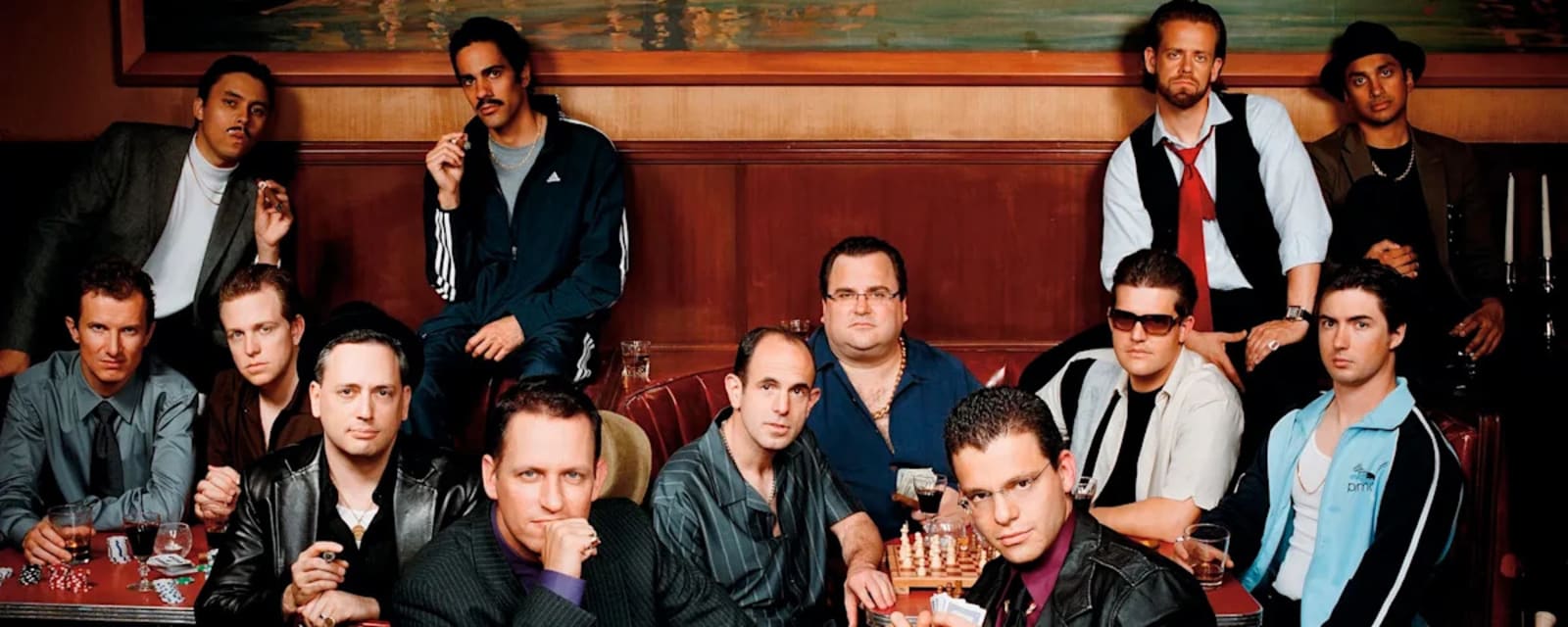
The disconnect between operational performance and stock price movement underscores a broader narrative: PayPal has become the forgotten member of a cohort whose influence has reshaped global finance and technology. Nineteen years prior, Fortune's 2007 cover story christened the "PayPal Mafia"—a group of former PayPal executives and founders including Peter Thiel, Reid Hoffman, David Sacks, Roelof Botha, Jeremy Stoppelman, Jawed Karim, Chad Hurley, and Max Levchin—who had recently cashed out via eBay's $1.5 billion acquisition of PayPal in 2002. These individuals subsequently built or funded a constellation of companies valued at approximately $30 billion at the time, a figure that has since expanded dramatically. The mafia's portfolio now encompasses Facebook, LinkedIn, YouTube, Yelp, Tesla, SpaceX, Palantir, and Affirm, representing collective enterprise value exceeding $1.5 trillion and producing multiple billionaires, a U.S. Vice President, and—in Elon Musk's case—the world's wealthiest individual.
PayPal, by contrast, has struggled to maintain relevance. The company has hemorrhaged market share to competing digital payment solutions, particularly Apple Pay, Google Pay, and Shop Pay, as consumer preferences shifted toward integrated payment ecosystems managed by technology giants. Incoming CEO Enrique Lores, making his first earnings call appearance, announced a strategic reorganization involving a new three-unit operating structure and a commitment to aggressive artificial intelligence adoption. These moves represent tactical responses to structural competitive pressures, though their efficacy remains uncertain. The juxtaposition is stark: the founders who built PayPal went on to create transformative enterprises, while the enterprise they left behind deteriorates incrementally, unable to arrest competitive decline despite solid near-term financial performance.
Go deeper than the headline
Research every firm in this story, track the ones that matter and get the daily briefing — free for 7 days.