
Key Takeaways
- • RPI's endowment contributed 18.3 percent of total operating revenue in FY25, up from 8.1 percent in FY21, according to The Polytechnic's analysis of IRS Form 990 filings.
- • Endowment spending for Rensselaer Plan Initiatives rose seven-fold, from $7.8 million in FY24 to $49.7 million in FY25, while total endowment distributions across all initiatives reached $99.8 million, close to 10 percent of the year-end endowment.
- • President Martin A. Schmidt said the Institute "cannot continue this indefinitely" in drawing beyond the traditional 5 percent endowment draw, and has limited hiring, declined to renew some teaching contracts and held back merit raises.
- • The endowment returned 12.5 percent in FY25 against a 9.3 percent policy index, but about 82 percent of the $1.025 billion endowment is restricted in perpetuity.
- • S&P maintains a BBB+ rating with a stable outlook, and RPI issued $60.9 million of Series 2026 bonds in April 2026, mostly to refinance older debt.
Summary
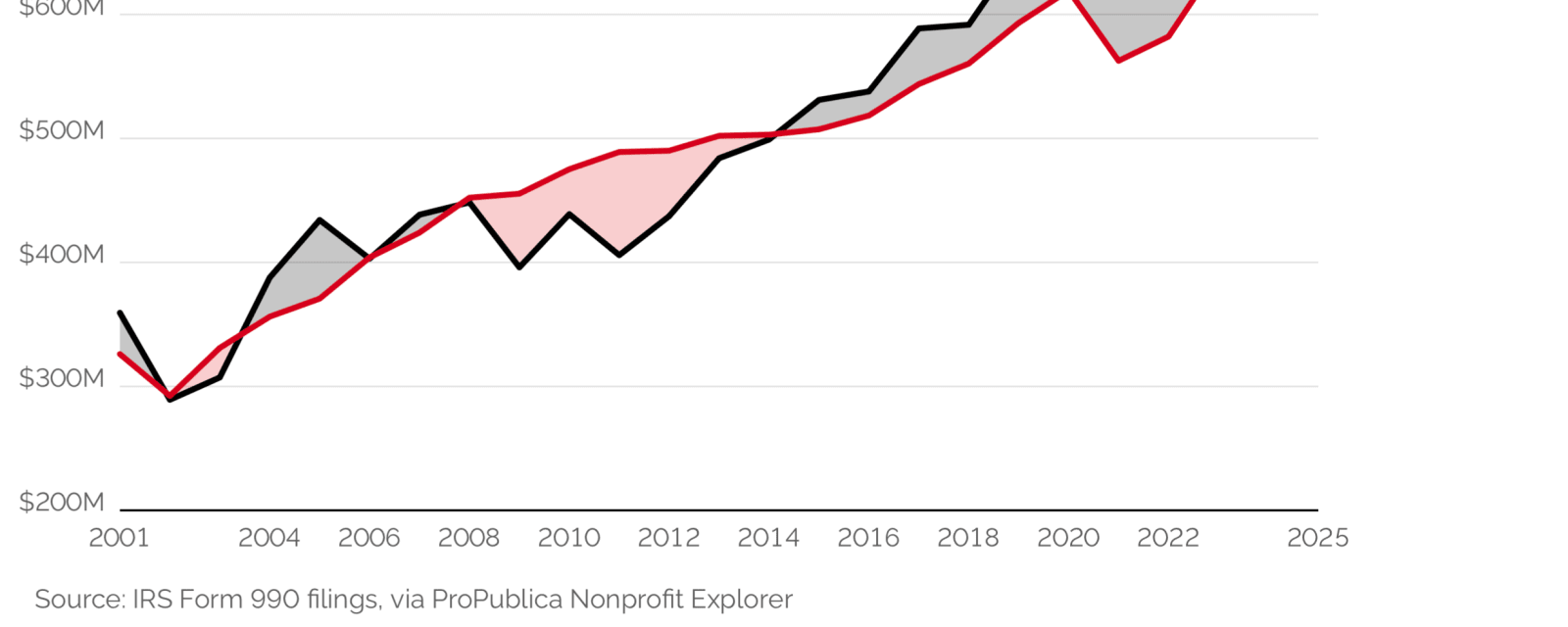
The Polytechnic reports that Rensselaer Polytechnic Institute is increasingly relying on its endowment to fund operations. Based on IRS Form 990 filings, net student-related revenue made up 55.1 percent of RPI's $504.1 million total operating revenue in FY25, down from 64.4 percent in FY21. The endowment's share of operating revenue rose from 8.1 percent in FY21 to 18.3 percent in FY25, a shift the publication says shows RPI leaning more heavily on investment returns.
The endowment stood at $1.025 billion as of June 30, 2025, with approximately 82 percent restricted in perpetuity by donors. The National Association of College and University Business Officers reports that endowment returns fund an average of 15.2 percent of private nonprofit university operating budgets nationally. RPI's Board of Trustees approved additional non-scholarship endowment spending for Rensselaer Plan Initiatives, which rose from $7.8 million in FY24 to $49.7 million in FY25. The Office of Institute Advancement reported total endowment distributions of $99.8 million across all initiatives in FY25.
President Martin A. Schmidt, speaking at his 2026 Fall Town Hall, cited endowment returns of 11.9 percent in FY24, 12.5 percent in FY25 and 13.7 percent in FY26, against a 9.3 percent policy index for FY25. He said the Institute had drawn beyond the traditional 5 percent endowment draw to support its invest-to-grow strategy and to protect against declining enrollment, adding, "we cannot continue this indefinitely." Undergraduate first-year enrollment was 1,394 last year, while a record graduating class of more than 2,000 produced a net drop of 600 to 700 undergraduates. As a result, the Institute has limited hiring, declined to renew some teaching contracts and held back merit raises.
The publication also notes that net assets fell from $929.7 million in FY00 to $414.8 million in FY13 before recovering to $969 million in FY25, and that liabilities peaked at $1.077 billion in FY20 before declining to $785.4 million in FY25. RPI issued $60.9 million of Series 2026 bonds in April 2026, including $20 million for facility reconstruction and $46 million to redeem 2015 refunded bonds. S&P Global Ratings has kept RPI at BBB+ with a stable outlook since 2017, and its 2026 report expects RPI to maintain operations around break-even while expanding resources over time.
Go deeper than the headline
Research every firm in this story, track the ones that matter and get the daily briefing — free for 7 days.